


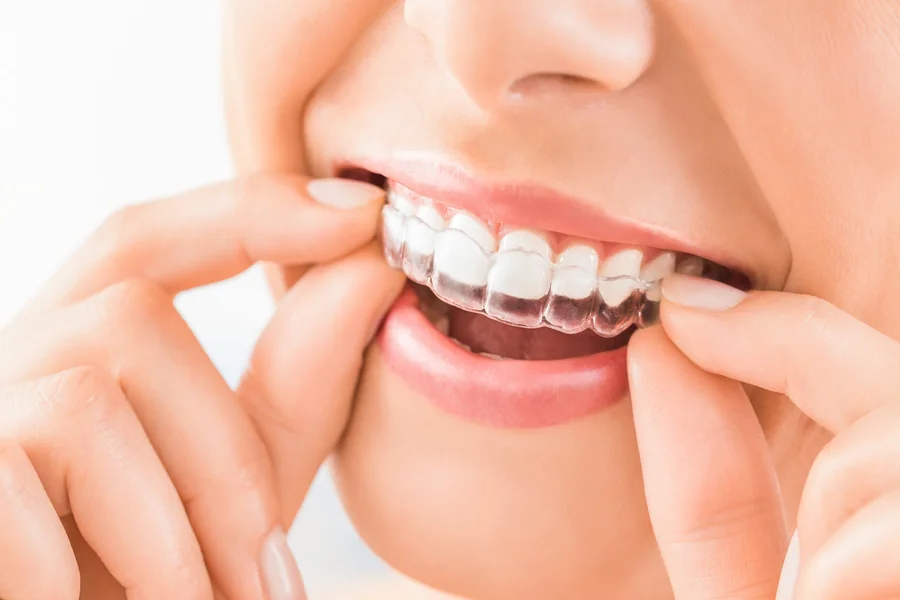
Are you tired of hiding your smile because your teeth feel crooked? Clear aligners use a series of clear trays to move teeth over time. This post will show how aligners work, their benefits, and how they compare to braces.
Keep reading.
How Clear Aligners Work
Clear aligners move teeth with steady pressure. Dentists plan the whole treatment using digital scans.
- Dentists take 3D scans and X-rays to map the mouth and assess malocclusion.
- Software creates a digital treatment plan that shows each tooth move step by step.
- Technicians or clinics 3D print molds or make the aligners directly from the digital files.
- Patients wear each clear aligner for about one to two weeks, usually for 20 to 22 hours a day.
- Each aligner applies gentle pressure to specific teeth, which shifts roots and crowns into new positions.
- Small tooth-colored attachments or elastics sometimes help hard-to-move teeth get the right force.
- Aligners stay removable so patients can keep strong dental hygiene and eat without metal braces.
- Remote monitoring and digital check-ins let orthodontists track progress and adjust the plan, and this process leads into the advantages of clear aligners.
Advantages of Clear Aligners
Clear aligners offer a great way to straighten teeth without the look of traditional braces. They are easy to remove for eating and cleaning, making dental hygiene simple.
Discreet Appearance
Transparent aligners sit close to teeth. They use thin dental plastic that blends with enamel. Many patients pick invisible aligners for aesthetics and smile design.
Dentists in orthodontics make each set from digital scans. The system keeps social settings casual and discreet. Aligner treatment avoids metal brackets and keeps oral hygiene easier.
Removability for Eating and Cleaning
Clear aligners come out for meals and cleaning. You eat without brackets or wires. You rinse and brush trays to keep dental hygiene high.
Removable trays cut food traps that often affect braces. Many patients report more comfort during orthodontics. Dentists customize wear schedules to match treatment goals.
Reduced Treatment Time (in some cases)
Treatment time with clear aligners can be shorter than with traditional braces. Some people finish their treatment in as little as six months. This faster timeline depends on the severity of tooth misalignment.
Customization plays a key role in speeding up the process. Each set of aligners is made to fit your teeth perfectly, which helps move them quicker.
Aligner technology has improved greatly too. More advanced methods like 3D printing and AI make this possible. With these tools, orthodontists plan out each step carefully for better results in less time.
Faster treatment can mean more smiles sooner for those who choose clear aligners as their solution for teeth alignment issues.
Comparing Clear Aligners to Traditional Braces
Clear aligners and traditional braces offer different paths to a better smile. Aligners are less visible and can be removed for meals and cleaning. Braces, on the other hand, stay fixed on your teeth.
Many find aligners more comfortable since they don’t have metal wires or brackets. If you want to know more about how they stack up against each other, keep reading!
Many patients have found success with Invisalign Queens NY, enjoying the benefits of a discreet orthodontic solution.
Aesthetic Differences
Clear aligners offer a big advantage in terms of appearance. They are made from clear plastic, making them nearly invisible. This allows people to smile with confidence during treatment.
Traditional braces use metal brackets and wires that stand out more on the teeth.
Many prefer clear aligners because they look discreet. People often don’t even notice it when someone wears them. For those who want to improve their smiles without drawing attention, this is a huge plus.
Clear aligners also provide comfort as they do not irritate the gums like metal braces can sometimes do.
Comfort and Maintenance
Clear aligners offer comfort during treatment. They fit snugly over the teeth, which reduces irritation to the gums and cheeks. Many people find them easier to wear than traditional braces.
Clear aligners are also removable. This makes eating and cleaning your teeth simple. You can take them out for meals or brush your teeth without hassle.
Maintenance is easy with clear aligners. Just clean them daily with a soft toothbrush and mild soap. Avoid using hot water as it can warp the plastic. Regular check-ups with an orthodontist are still necessary to ensure progress is on track, but caring for these aligners requires less effort compared to metal braces; you do not have brackets or wires to worry about.
Innovations in Clear Aligner Technology
Innovations in clear aligner technology include 3D printing, AI for remote check-ups, and faster tooth movement tools. These changes make aligning your teeth easier and more efficient.
Want to learn what this means for you? Keep reading!
3D-Printed Aligners
3D-printed aligners use advanced technology to create a perfect fit for each patient. The process starts with a digital scan of the teeth. This scan helps design custom aligners that move teeth into place gradually.
These aligners are made from strong plastic, making them durable and comfortable. They can be printed quickly, reducing wait times for patients. The precision in 3D printing ensures that each set of aligners works effectively for the best results in dental treatment.
Remote Monitoring with AI
Remote monitoring with AI gives patients a new way to track their progress. Smart technology helps orthodontists check aligners without office visits. Patients can send pictures of their teeth through an app.
This keeps treatment on schedule.
AI software analyzes these images quickly. It spots any issues that may arise during the treatment process. With this, doctors can adjust plans as needed. This means better results and a smoother journey for patients using clear aligners.
Accelerated Tooth Movement Technologies
Accelerated Tooth Movement Technologies help move teeth faster during orthodontic treatment. These methods often use techniques like vibration or light force to speed up the process.
Studies show that these technologies can cut treatment time by 30 to 50 percent.
One popular method is using devices that create gentle vibrations in the mouth. This light stimulation helps bones around the teeth soften and respond better to pressure from aligners or braces.
Patients enjoy shorter treatment periods while still achieving great results with their smile design.
Conclusion
Clear aligners are changing how we think about orthodontics. They offer a new way to straighten teeth with comfort and style. Many people prefer their discreet look over traditional braces.
With advances in technology, these aligners get better every day. Choosing clear aligners can lead to a brighter smile and improved oral health for many.
